• Configurator Tool
  • Service & Support
  • Contact
Hoffman Security Solutions
  • Key Management Systems
        • KeyWatcher
        • KeyBank
        • KeyWatcher Fleet
        • SmartKey Locker Systems
        • Keybank Touch Gray 6 Mods 16 Keys Each
  • Exit Prevention
  • School Safety Solutions
  • Products
  • Industries
    • Correctional Facilities
    • Gaming
    • Hospitality & Entertainment
    • Higher Education
    • City & Municipalities
    • Property Management
    • Fleet & Logistics
    • Auto Dealerships
  • About Us
    • Leadership Team
    • Areas We Serve
    • Careers
    • Success Stories
    • Blog
  • Menu Menu

Common Facility Key Control Mistakes and How to Avoid Them

Most security leaders can point to their access control systems, their surveillance infrastructure, and their visitor management protocols without hesitation. Ask them to describe exactly who has a copy of the master key right now, and the answer gets complicated fast.

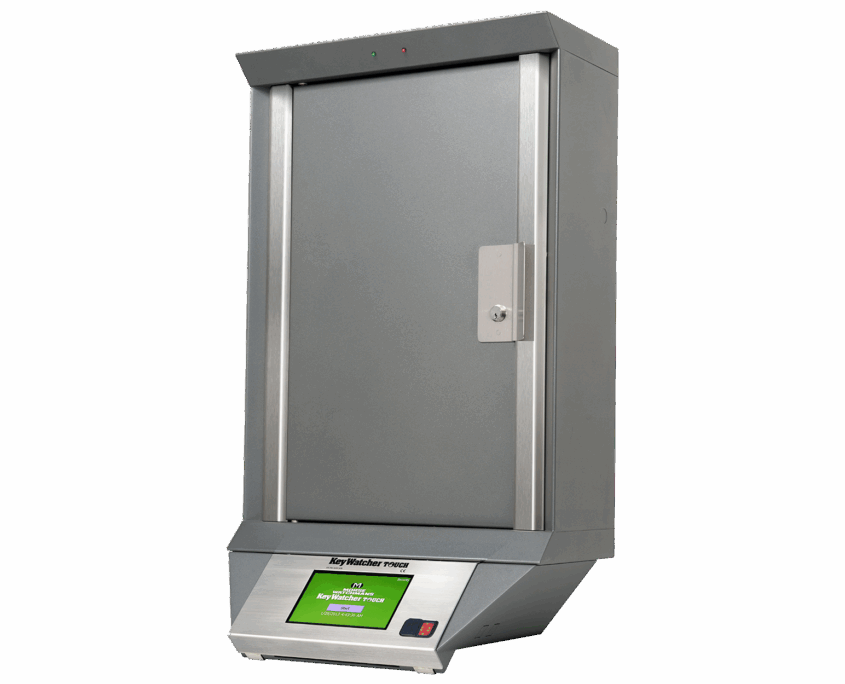
Keywatcher Touch 3 Mod With Door Closed Left Facing

Facility key control is one of the most overlooked risk vectors in physical security. It’s not flashy, it doesn’t show up on a dashboard, and it rarely gets budget attention until something goes wrong. But for enterprise-level facilities managing multiple buildings, high staff turnover, regulated operations, or audit obligations, weak key control isn’t a minor administrative gap. It’s a liability that touches finance, operations, legal exposure, and institutional reputation all at once.

The good news is that most key control failures follow recognizable patterns. Knowing what to look for is the first step toward fixing it.

The Real Cost of Poor Facility Key Control

The consequences of poor facility key control tend to compound quietly over time, which is exactly what makes them so difficult to catch before they become serious.

Financial Exposure

When a key is lost or an employee leaves without returning one, the responsible decision is to rekey every lock that key could access. In a large facility, that cost adds up quickly, and it’s a recurring expense rather than a one-time hit. Facilities with high turnover can find themselves cycling through rekeying costs repeatedly across a year without ever addressing the root cause.

Beyond rekeying, there’s incident liability to consider. If a security breach occurs and your facility can’t demonstrate that key access was properly controlled and documented, the legal and financial exposure can far exceed whatever it would have cost to implement a proper key management system in the first place.

Operational and Reputational Risk

Poor key control also creates operational drag. When no one is certain which keys are out, who has them, or whether a vendor from last month still has a copy they were never asked to return, supervisors spend time chasing accountability instead of managing their teams. In regulated industries like corrections, gaming, or healthcare, that ambiguity doesn’t just slow things down. It can trigger compliance failures, failed audits, and the reputational damage that follows.

Why Manual Logs and Spreadsheets Can’t Keep Up

It’s tempting to treat a well-maintained spreadsheet or a neatly organized sign-out binder as a functional key control system. For very small operations, it might be enough. For any facility with enterprise-level complexity, it isn’t.

The Enforcement Problem

A spreadsheet can record that someone checked out a key. It can’t stop them from taking one they weren’t supposed to. It can’t alert a supervisor when a key hasn’t been returned after a shift ends. It can’t flag an anomaly in access patterns or prevent a terminated employee’s credentials from still being active. Manual logs create the appearance of a key control system without actually enforcing one.

Real risk mitigation strategies require controls that operate independently of individual behavior. A key management system built on hardware and software enforces policy automatically, whether the person managing it is in the room or not.

Human Error and Institutional Knowledge Risk

Even the most diligent manual process is vulnerable to human error. Entries get skipped, logs get backdated, and the person who actually knows which keys are where is often a single individual whose departure would leave the entire system in disarray. That kind of institutional knowledge risk is particularly dangerous in high-turnover environments where the people responsible for key accountability change frequently.

An electronic key cabinet with audit trail capabilities removes the single point of failure entirely. The system knows what happened, regardless of who’s managing it that day.

If your current process relies on paper logs or spreadsheets to track key access, KeyWatcher gives you the real-time accountability and audit-ready reporting your facility actually needs.

Explore KeyWatcher

The Hidden Risks Most Facilities Overlook

Some of the most significant facility key control vulnerabilities aren’t the obvious ones. They’re the habits and assumptions that have been in place long enough to feel normal.

Master Key Exposure

Master keys are convenient, and that convenience is exactly the problem. A single master key that grants access to an entire facility or a full wing represents a massive concentration of risk. If that key is lost, duplicated without authorization, or taken by a departing employee, the exposure isn’t limited to one door or one area. It’s system-wide, and the only remediation is a full rekey.

Facilities that rely heavily on master keys often don’t have a clear picture of how many copies exist, where they are, or who’s had access to them over time. That’s not a key control system. It’s an accountability vacuum.

Shadow Copies and Vendor Access

Shadow key copies are more common than most facilities want to admit. A well-meaning staff member has a duplicate made for convenience. A contractor is given temporary access and never asked to return the key. A vendor who serviced equipment last year still has a copy that was never logged or tracked. Each of these scenarios represents an access point your key control system doesn’t know about.

Vendor access is a particular blind spot. Third-party personnel often move through facilities with less oversight than employees, and the offboarding process for vendors is rarely as structured as it is for staff. Without a key management system that tracks every key issued and ensures every key returned, these gaps accumulate silently.

Employee Turnover and Offboarding Gaps

High-turnover environments face a compounding version of this problem. Every employee who leaves without returning all issued keys is a potential security gap. In facilities where offboarding processes aren’t tightly integrated with key control accountability, it’s easy for keys to walk out the door simply because no one had a system in place to prevent it.

A structured key management system paired with clear offboarding protocols makes it impossible to complete a departure checklist without accounting for every key that employee was issued.

Compliance, Audit Readiness, and Chain of Custody

For security leaders in regulated industries, facility key control isn’t just an operational concern. It’s a governance issue. Auditors and oversight bodies don’t just want to know that your keys are secure. They want documentation that proves it.

What Auditors Actually Look For

When a compliance review turns to physical security, the questions are specific. Who had access to this area on this date? When was that key last returned? Can you demonstrate that your key control policy was actually followed, or just that one exists on paper? Without an electronic key cabinet with audit trail functionality, those questions are difficult to answer with confidence.

An audit trail that logs every transaction in real time, tied to a specific user, time stamp, and key, is the foundation of a defensible compliance posture. It also makes internal investigations significantly faster and more reliable when an incident does occur.

Chain of Custody as a Risk Management Strategy

Chain of custody documentation isn’t just a corrections or law enforcement concern. Any facility managing sensitive areas, regulated assets, or high-value equipment needs to demonstrate that access was controlled and traceable. That’s one of the most important risk mitigation strategies available to security leaders, and it’s only possible when the right key control system is in place.

Signs Your Current Key Control System Is Due for an Upgrade

A few indicators that your current approach may be creating more risk than it’s managing:

  • You can’t immediately tell which keys are currently checked out and by whom
  • You’ve rekeyed locks more than once in the past year due to lost or unreturned keys
  • Your key records live in a spreadsheet or paper log that requires manual updates
  • Your offboarding process relies on trust rather than system-enforced returns
  • You’d struggle to produce a complete access report if an auditor asked for one today.

If any of those sound familiar, the issue isn’t effort or intention. It’s infrastructure.

How to Modernize Without Disrupting Operations

The concern most facilities have when considering an upgrade to their key control system is disruption. The reality is that modern electronic key management is designed for operational environments that can’t afford downtime or complexity.

Systems scale to fit the size and structure of any facility, from a single cabinet managing a few dozen keys to a networked deployment across multiple buildings with hundreds of users. Staff onboarding is straightforward, with most users comfortable with the system within a single shift. Administrators get a clear software interface for managing permissions, running reports, and adjusting access without needing technical expertise.

The transition from manual to electronic doesn’t have to be an overhaul. For many facilities, it starts with a single cabinet in the highest-risk area and grows from there.

Build a Key Control Program That Holds Up

Facility key control is a risk management issue, and it deserves to be treated like one. The mistakes that create the most exposure aren’t dramatic. They’re the quiet accumulation of outdated habits, manual processes that can’t enforce policy, and accountability gaps that go unnoticed until they matter.

At Hoffman Security Solutions, we work with facilities across a range of industries to build key control programs that are traceable, enforceable, and built to last. With more than 30 years as a certified Morse Watchmans dealer, we bring the kind of experience that turns key management from an afterthought into a genuine security asset. If your current approach isn’t giving you the visibility and accountability your facility requires, we’re ready to help you take the next step.

Share This Post

  • Share on Facebook
  • Share on X
  • Share on WhatsApp
  • Share on Pinterest
  • Share on LinkedIn
  • Share on Tumblr
  • Share on Vk
  • Share on Reddit
  • Share by Mail

More Like This

Keywatcher Touch

Why Web-Based Key Management Software Is the Future for Facility Security

Key Management System
https://www.hoffman-co.com/wp-content/uploads/2025/10/Keywatcher-Touch.png 1250 1544 Abstrakt Marketing /wp-content/uploads/2025/07/HoffmanSecurity_Logo.png Abstrakt Marketing2026-06-12 13:47:482026-06-12 13:47:52Why Web-Based Key Management Software Is the Future for Facility Security
Keywatcher Touch 2

Signs Your Facility Needs an Electronic Key Management System

Key Management System
https://www.hoffman-co.com/wp-content/uploads/2025/10/Keywatcher-Touch-2.png 1250 1544 Abstrakt Marketing /wp-content/uploads/2025/07/HoffmanSecurity_Logo.png Abstrakt Marketing2026-06-12 13:38:162026-06-12 13:38:24Signs Your Facility Needs an Electronic Key Management System
Why Auto Dealerships Are Replacing Manual Key Logs With Smart Key Cabinets

Why Auto Dealerships Are Replacing Manual Key Logs with Smart Key Cabinets

Key Management System
https://www.hoffman-co.com/wp-content/uploads/2026/04/Why-Auto-Dealerships-Are-Replacing-Manual-Key-Logs-with-Smart-Key-Cabinets.jpg 1250 2000 Abstrakt Marketing /wp-content/uploads/2025/07/HoffmanSecurity_Logo.png Abstrakt Marketing2026-04-01 07:57:012026-06-12 07:59:46Why Auto Dealerships Are Replacing Manual Key Logs with Smart Key Cabinets
Why Ongoing Service Agreements Are Critical For An Electronic Key Management System

Why Ongoing Service Agreements Are Critical for an Electronic Key Management System

Key Management System
https://www.hoffman-co.com/wp-content/uploads/2026/02/Why-Ongoing-Service-Agreements-Are-Critical-for-an-Electronic-Key-Management-System.jpg 1250 2000 Abstrakt Marketing /wp-content/uploads/2025/07/HoffmanSecurity_Logo.png Abstrakt Marketing2026-02-23 10:12:022026-06-12 07:59:46Why Ongoing Service Agreements Are Critical for an Electronic Key Management System
Why Electronic Key Management Should Be A Priority In Access Control Strategy

Why Electronic Key Management Should Be a Priority in Access Control Strategy

Key Management System
https://www.hoffman-co.com/wp-content/uploads/2026/02/Why-Electronic-Key-Management-Should-Be-a-Priority-in-Access-Control-Strategy.jpg 1250 2000 Abstrakt Marketing /wp-content/uploads/2025/07/HoffmanSecurity_Logo.png Abstrakt Marketing2026-02-23 09:25:412026-06-12 07:59:46Why Electronic Key Management Should Be a Priority in Access Control Strategy
Keys On Hooks

How to Build a Key Control Policy That Works

Key Management System
https://www.hoffman-co.com/wp-content/uploads/2025/09/keys-on-hooks.jpg 1250 2000 Abstrakt Marketing /wp-content/uploads/2025/07/HoffmanSecurity_Logo.png Abstrakt Marketing2026-02-12 10:23:222026-06-12 13:39:08How to Build a Key Control Policy That Works
Previous Previous Previous Next Next Next

Categories

  • Key Management System
  • Keywatcher
Hoffmansecurity Logo White

Secure keys, track assets and protect people with HSS.

Learn More

Stay Connected

What We Do

Electronic Key Management

Exit Prevention

School Safety Solutions

Contact Us

230 James Street
STE A2
Wales, WI 53183

(888) 950-8798

[email protected]

Website by Abstrakt Marketing Group ©
  • Privacy Policy
  • Sitemap
Scroll to top Scroll to top Scroll to top

This site uses cookies. By continuing to browse the site, you are agreeing to our use of cookies.

AcceptLearn more

Cookie and Privacy Settings


How we use cookies

We may request cookies to be set on your device. We use cookies to let us know when you visit our websites, how you interact with us, to enrich your user experience, and to customize your relationship with our website.

Click on the different category headings to find out more. You can also change some of your preferences. Note that blocking some types of cookies may impact your experience on our websites and the services we are able to offer.

Essential Website Cookies

These cookies are strictly necessary to provide you with services available through our website and to use some of its features.

Because these cookies are strictly necessary to deliver the website, refusing them will have impact how our site functions. You always can block or delete cookies by changing your browser settings and force blocking all cookies on this website. But this will always prompt you to accept/refuse cookies when revisiting our site.

We fully respect if you want to refuse cookies but to avoid asking you again and again kindly allow us to store a cookie for that. You are free to opt out any time or opt in for other cookies to get a better experience. If you refuse cookies we will remove all set cookies in our domain.

We provide you with a list of stored cookies on your computer in our domain so you can check what we stored. Due to security reasons we are not able to show or modify cookies from other domains. You can check these in your browser security settings.

Other external services

We also use different external services like Google Webfonts, Google Maps, and external Video providers. Since these providers may collect personal data like your IP address we allow you to block them here. Please be aware that this might heavily reduce the functionality and appearance of our site. Changes will take effect once you reload the page.

Google Webfont Settings:

Google Map Settings:

Google reCaptcha Settings:

Vimeo and Youtube video embeds:

Accept settingsHide notification only