Why One Electronic Key Management System Should Run Your Entire County
County governments don’t have a key problem. They have a systems problem.

County governments don’t have a key problem. They have a systems problem.
Most county operations leaders have spent years making the same decision: figure out key security for one building, move on to the next budget cycle, repeat. The jail gets an electronic key management system. The courthouse gets a new lockbox. Public works gets a sign-out sheet. The result isn’t a key control strategy. It’s a collection of disconnected workarounds, each solving a local problem while the county-wide gap keeps growing. The question worth asking isn’t whether your buildings are secure. It’s whether your county has a system, or just a series of patches.
County government is uniquely complex in this regard. A single county can operate dozens of facilities across a wide geographic footprint, with departments that have different staffing models, different compliance requirements, and different levels of security risk. No two buildings are identical. But the underlying accountability challenge, knowing who has which keys, in which building, at any given time, is exactly the same across all of them. The problem isn’t that counties haven’t tried to solve it. It’s that they’ve been solving it one building at a time, which means they’ve never fully solved it at all.
When key security is managed one facility at a time, no one has a complete picture. A facilities director knows what’s happening at the courthouse. A sheriff knows what’s happening in the jail. But the county administrator trying to understand access accountability across all of them is working from incomplete information, because the systems don’t talk to each other and the reporting doesn’t roll up. That’s not a staffing problem or a budget problem. It’s what happens when facility key management gets treated as a local issue rather than a county-wide responsibility.
The fragmentation becomes most visible during personnel transitions. When an employee leaves the county, deactivating their access should be a single action. In a fragmented environment, it’s a multi-step process that requires contacting every department head, confirming which keys were issued, and hoping the paper trail is accurate enough to trust. Counties that have experienced a security incident know exactly how quickly that becomes a liability. Those that haven’t are often one incident away from finding out.
Counties that manage key security building by building often end up purchasing overlapping solutions: different cabinet systems for different facilities, different service contracts, different upgrade cycles that never align. On the operations side, the real expense is the administrative overhead of reconciling inconsistent records, investigating missing keys, and managing access changes manually across a dozen systems. Each building’s solution looks reasonable when evaluated on its own. It’s only when you step back and look at the county as a whole that the full cost of fragmentation becomes clear.
Counties that move to a unified key control system don’t just improve security in individual buildings. They change how they think about accountability as an organization. Instead of responding to incidents after keys go missing, they have audit trails that show exactly who had access and when. Instead of managing permissions building by building, they can make changes across every facility from one platform. That shift from reactive to strategic is what separates a county that has key management handled from one that’s still hoping nothing goes wrong.
It also changes the conversation at the leadership level. When a county administrator can pull a single report covering access activity across every department, key security stops being a facilities problem and starts being an organizational asset. That kind of visibility supports compliance reporting, internal investigations, and the operational transparency that county leadership increasingly needs to demonstrate to constituents and oversight bodies alike. It’s a different posture entirely, and it starts with the decision to treat key management as a county-wide system rather than a department-level task.
Curious what a county-wide approach would look like for your operation? Talk to the HSS team about building a unified key management strategy.
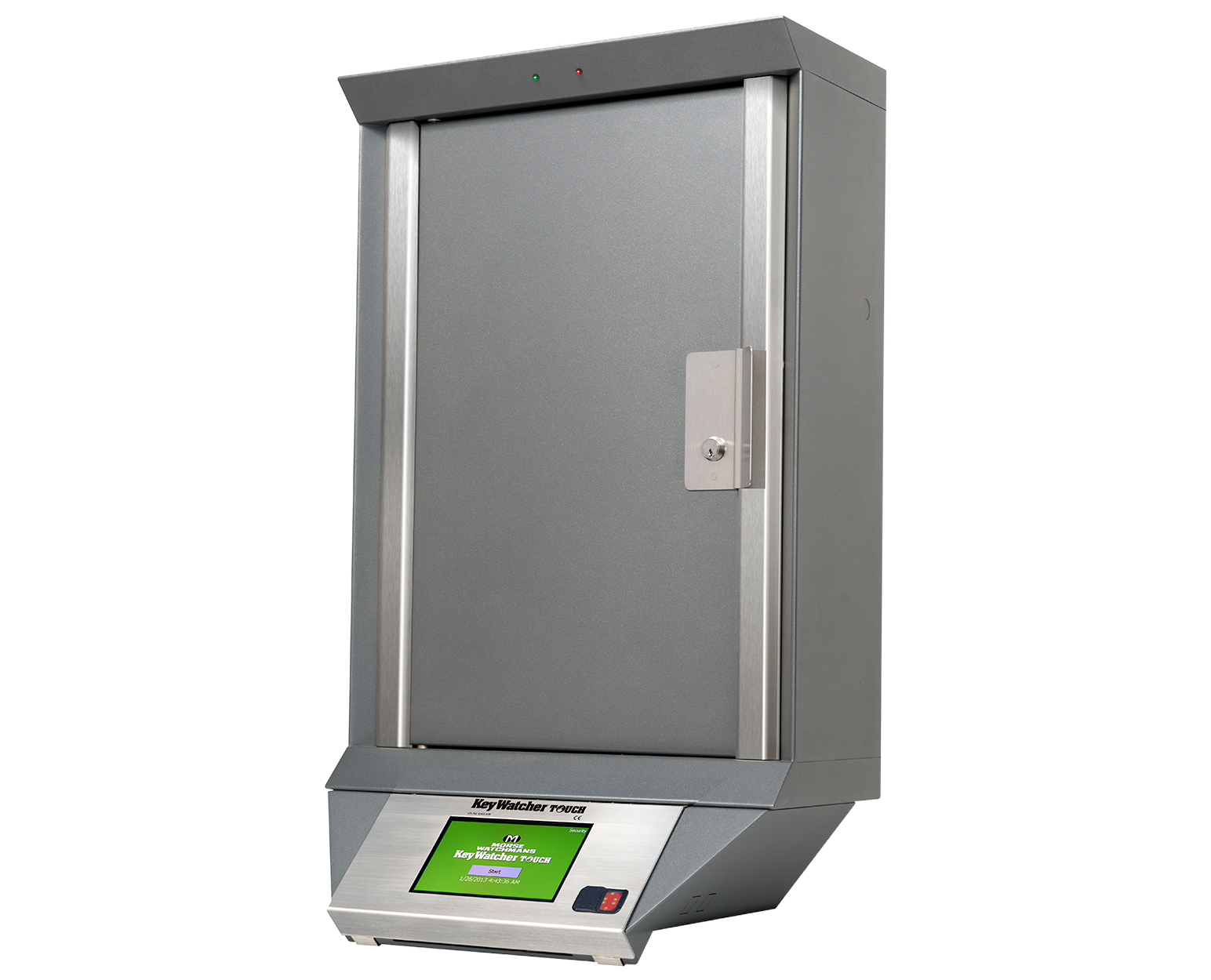
Deploying one electronic key management system across every county facility isn’t just operationally cleaner. It’s strategically smarter. Staff who already know how to use the system in the jail don’t need retraining when it’s deployed in the courthouse. Reporting is consistent across buildings. When a county administrator needs to understand access accountability across departments, they’re looking at one platform instead of trying to reconcile five different logs from five different systems. Managing multiple key security solutions also means managing multiple service contracts, multiple points of contact for technical support, and upgrade cycles that never align. Consolidating to one platform means one relationship, one service agreement, and one team that understands your entire county footprint. Learn more about the electronic key management systems HSS deploys across multi-facility environments.
A well-designed key cabinet system isn’t built for one building. It’s built to grow. Counties that start with a single facility and expand department by department aren’t starting over each time. They’re adding to an existing infrastructure: the same platform, the same reporting logic, the same user experience for staff. The pace of that expansion can match the county’s budget and operational reality. Some counties move quickly, rolling out across multiple facilities in a single fiscal year. Others take a phased approach over several years. Either way, the system is always building toward something rather than accumulating more patches. HSS has helped city and municipality clients across the Midwest expand their key management programs one department at a time, using existing infrastructure as the foundation rather than replacing it.
A county running a unified key tracking system has a fundamentally different operational posture than one managing access building by building. When a staff member leaves, access is revoked across every facility at once. When a new employee joins, their access profile can be configured to match their role across every relevant facility before their first day. When an incident occurs, the audit trail covers every building under the system, not just the one where something happened. The electronic key cabinet in the jail, the courthouse, and the public works garage are all feeding the same platform, which means the county administrator finally has the county-wide view that the patchwork approach never could provide.
For counties subject to state oversight or federal compliance requirements, that unified reporting capability isn’t a convenience. It’s a necessity. Instead of pulling records from five different systems and hoping they’re formatted consistently, county staff can generate a single report covering every facility, every key transaction, and every access event across the entire system. Learn more about how correctional facilities use KeyWatcher as the foundation for a broader county key management program.
If your county is ready to move from a collection of building-level fixes to a strategy that works across every department, HSS is the right partner to help you build it. With over 30 years of experience and more than 800 systems deployed across the Midwest, we know what it takes to deploy an electronic key management system that works across every county building. Contact our team to start mapping out what one system could look like for your county.
 https://www.hoffman-co.com/wp-content/uploads/2026/09/MW-Key-Watcher-Sentinel-6-Module2.png
1250
2000
Abstrakt Marketing
/wp-content/uploads/2025/07/HoffmanSecurity_Logo.png
Abstrakt Marketing2026-09-11 13:40:362026-09-11 13:42:21Beyond the Badge: Traceable Key Management for County Employees Across Every Department
https://www.hoffman-co.com/wp-content/uploads/2026/09/MW-Key-Watcher-Sentinel-6-Module2.png
1250
2000
Abstrakt Marketing
/wp-content/uploads/2025/07/HoffmanSecurity_Logo.png
Abstrakt Marketing2026-09-11 13:40:362026-09-11 13:42:21Beyond the Badge: Traceable Key Management for County Employees Across Every Department https://www.hoffman-co.com/wp-content/uploads/2026/08/person-using-smartkey-locker.jpg
1250
2000
Abstrakt Marketing
/wp-content/uploads/2025/07/HoffmanSecurity_Logo.png
Abstrakt Marketing2026-08-31 15:18:362026-09-11 13:40:47What Campus Security Management Gets Wrong About Physical Key Control
https://www.hoffman-co.com/wp-content/uploads/2026/08/person-using-smartkey-locker.jpg
1250
2000
Abstrakt Marketing
/wp-content/uploads/2025/07/HoffmanSecurity_Logo.png
Abstrakt Marketing2026-08-31 15:18:362026-09-11 13:40:47What Campus Security Management Gets Wrong About Physical Key Control https://www.hoffman-co.com/wp-content/uploads/2026/06/5Z4A0436.jpg
1250
2000
Abstrakt Marketing
/wp-content/uploads/2025/07/HoffmanSecurity_Logo.png
Abstrakt Marketing2026-06-23 07:54:502026-06-29 11:13:41Why Every County Department Needs an Electronic Key Management System
https://www.hoffman-co.com/wp-content/uploads/2026/06/5Z4A0436.jpg
1250
2000
Abstrakt Marketing
/wp-content/uploads/2025/07/HoffmanSecurity_Logo.png
Abstrakt Marketing2026-06-23 07:54:502026-06-29 11:13:41Why Every County Department Needs an Electronic Key Management System https://www.hoffman-co.com/wp-content/uploads/2026/06/Officer-putting-cuffs-on-person-in-jail_.jpg
1250
2000
Abstrakt Marketing
/wp-content/uploads/2025/07/HoffmanSecurity_Logo.png
Abstrakt Marketing2026-06-16 14:31:372026-06-16 14:31:43How Correctional Facilities Use Electronic Key Management to Prevent Security Breaches
https://www.hoffman-co.com/wp-content/uploads/2026/06/Officer-putting-cuffs-on-person-in-jail_.jpg
1250
2000
Abstrakt Marketing
/wp-content/uploads/2025/07/HoffmanSecurity_Logo.png
Abstrakt Marketing2026-06-16 14:31:372026-06-16 14:31:43How Correctional Facilities Use Electronic Key Management to Prevent Security Breaches https://www.hoffman-co.com/wp-content/uploads/2025/10/Keywatcher-Touch.png
1250
1544
Abstrakt Marketing
/wp-content/uploads/2025/07/HoffmanSecurity_Logo.png
Abstrakt Marketing2026-06-12 13:47:482026-06-12 13:47:52Why Web-Based Key Management Software Is the Future for Facility Security
https://www.hoffman-co.com/wp-content/uploads/2025/10/Keywatcher-Touch.png
1250
1544
Abstrakt Marketing
/wp-content/uploads/2025/07/HoffmanSecurity_Logo.png
Abstrakt Marketing2026-06-12 13:47:482026-06-12 13:47:52Why Web-Based Key Management Software Is the Future for Facility Security https://www.hoffman-co.com/wp-content/uploads/2025/10/Keywatcher-Touch-2.png
1250
1544
Abstrakt Marketing
/wp-content/uploads/2025/07/HoffmanSecurity_Logo.png
Abstrakt Marketing2026-06-12 13:38:162026-06-12 13:38:24Signs Your Facility Needs an Electronic Key Management System
https://www.hoffman-co.com/wp-content/uploads/2025/10/Keywatcher-Touch-2.png
1250
1544
Abstrakt Marketing
/wp-content/uploads/2025/07/HoffmanSecurity_Logo.png
Abstrakt Marketing2026-06-12 13:38:162026-06-12 13:38:24Signs Your Facility Needs an Electronic Key Management System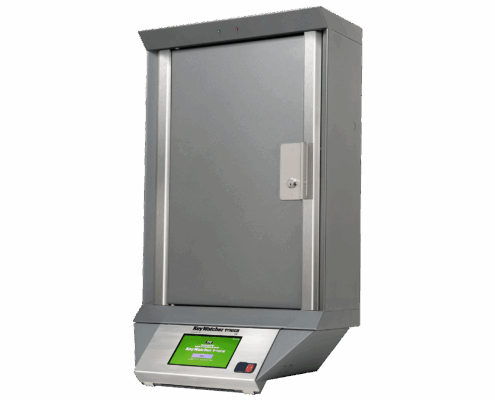 https://www.hoffman-co.com/wp-content/uploads/2025/07/KeyWatcher_Touch-3-mod_with_door_closed-left_facing.png
1250
1544
Abstrakt Marketing
/wp-content/uploads/2025/07/HoffmanSecurity_Logo.png
Abstrakt Marketing2026-06-12 12:09:592026-06-12 12:10:04Common Facility Key Control Mistakes and How to Avoid Them
https://www.hoffman-co.com/wp-content/uploads/2025/07/KeyWatcher_Touch-3-mod_with_door_closed-left_facing.png
1250
1544
Abstrakt Marketing
/wp-content/uploads/2025/07/HoffmanSecurity_Logo.png
Abstrakt Marketing2026-06-12 12:09:592026-06-12 12:10:04Common Facility Key Control Mistakes and How to Avoid Them https://www.hoffman-co.com/wp-content/uploads/2026/04/Why-Auto-Dealerships-Are-Replacing-Manual-Key-Logs-with-Smart-Key-Cabinets.jpg
1250
2000
Abstrakt Marketing
/wp-content/uploads/2025/07/HoffmanSecurity_Logo.png
Abstrakt Marketing2026-04-01 07:57:012026-06-12 07:59:46Why Auto Dealerships Are Replacing Manual Key Logs with Smart Key Cabinets
https://www.hoffman-co.com/wp-content/uploads/2026/04/Why-Auto-Dealerships-Are-Replacing-Manual-Key-Logs-with-Smart-Key-Cabinets.jpg
1250
2000
Abstrakt Marketing
/wp-content/uploads/2025/07/HoffmanSecurity_Logo.png
Abstrakt Marketing2026-04-01 07:57:012026-06-12 07:59:46Why Auto Dealerships Are Replacing Manual Key Logs with Smart Key Cabinets https://www.hoffman-co.com/wp-content/uploads/2026/02/Why-Ongoing-Service-Agreements-Are-Critical-for-an-Electronic-Key-Management-System.jpg
1250
2000
Abstrakt Marketing
/wp-content/uploads/2025/07/HoffmanSecurity_Logo.png
Abstrakt Marketing2026-02-23 10:12:022026-06-12 07:59:46Why Ongoing Service Agreements Are Critical for an Electronic Key Management System
https://www.hoffman-co.com/wp-content/uploads/2026/02/Why-Ongoing-Service-Agreements-Are-Critical-for-an-Electronic-Key-Management-System.jpg
1250
2000
Abstrakt Marketing
/wp-content/uploads/2025/07/HoffmanSecurity_Logo.png
Abstrakt Marketing2026-02-23 10:12:022026-06-12 07:59:46Why Ongoing Service Agreements Are Critical for an Electronic Key Management System